

Watch the Trailer
Director: Paul Donnelly | Co Director / Producer: April Howard
Screenings
See the film here first, before it reaches TV screens and film festivals worldwide.
For each premiere, we are doing a plog*.
*Plogging: A fitness and environmental trend combining jogging or walking with picking up trash, originating from the Swedish word plocka (to pick up) and jogging.

Tower Cinemas
Newcastle, NSW Premiere - ONE DAY ONLY
10 October 2026 · 4pm
TICKETS

Star Cinema
Bendigo, VIC Premiere - ONE DAY ONLY
18 October 2026 · 1pm
TICKETS

Five Star Cinemas
New Farm, QLD
16 January 2027 · 4pm
TICKETS
More TBC!
Are you interested in hosting a screening of Plastic Tsunami: Voices of the Pacific? Get in touch using the form below!
Pre-COP31
Fiji
7 October 2026
Deakin University
Victoria
16 October 2026
Plastic Tsunami - Voices of the Pacific
An exciting update!
23 April 2026
It's been some time since our last update and a lot has happened so we wanted to get in touch with a snapshot of what has transpired since you backed us and the film!
Screen Australia has come on board to support the development of the half hour documentary into an hour length film. We have also secured the commitment of a global distributor TVF International to take the film to global markets mid year and as of last week, SBS has come on board with an offer to Broadcast our film “Plastic Tsunami - Voices of the Pacific”. ABC International has also agreed to broadcast to the Pacific Island region! We are also in discussions with other broadcasters and have received interest from local and international film festivals. Most importantly, we plan to host cinema screenings in the second half of the year of which you will be invited - we’d love you to join us.
In August last year, I attended INC 5.2 in Geneva. It was the fifth session of the Intergovernmental Negotiating Committee to develop an international legally binding instrument on plastic pollution, including in the marine environment. The experience was equally devastating and motivating because I watched the world order play out in a theatre where David looked Goliath in the eye and blocked the diluted Treaty in a bid to defend us all. Witnessing that has given us more fire and inspiration to use this film to expose the truth and back the Pacific Island nations in their fight.
While I was there, a man named Lazarus from Palau was at the forefront of my mind, as he and so many others like him are fighting for their homes and environments. In an article published at the time, People over Plastic, I shared how Lazarus, a man you’ll meet in the documentary and a former ranger, took us to a local Island in Palau where we were confronted by the volume of plastic on his beach. The debris has been brought there by global currents transporting the waste from international waters and shores. Over many years Lazarus has transformed this waste into haunting installations, not art for art’s sake, but an act of defiance and call for help from a community drowning in plastic. His powerful voice adds urgency and humanity to this crisis.
We are returning to Fiji and Solomon Islands in the coming weeks and next month, we’ll be working and filming alongside the Sea Shepherd team at “clean ups” in Cape York and Arnhem Land where plastic pollution is hitting Communities hard as waste is carried via the currents from Asia. Sea Shepherd will also support us in distributing the film through their Australian and global community and education facilities have expressed interest in distributing content through their global schools.
As we continue to navigate the production process, your support remains vital and our funding page remains open via our Documentary Australia page where all contributions are tax deductible and directly help us bring these voices to the global stage.
A final request as we walk through this global crisis together, is to not give up hope, know that you are powerful as one and each choice we make adds up to some. If you can lower your household and business plastic footprint please do, and have conversations with your local members of government. We’ll be creating template letters you can use as well as education and engagement resources.
Some new content has been posted to the film website www.voicesofthepacific.org and you can now follow us on Instagram.
We will be back in touch when anything else significant transpires.
People over Plastic
Article by April Howard
8 August 2025
Imagine this…you are on a remote island in the North Pacific Ocean. The sunsets are beyond “Instagram worthy”. There’s something very special and sacred about the place. You have an urge to protect it by keeping it a secret. There are no resorts, but there is a beautiful community, with descendants of the Island's Custodian’s who have looked after the land and its waters since time immemorial. This is a place you only read about in fiction or a last frontier travel article. A place untrodden by a tirade of tourist footsteps and associated destructions. This place has somehow been suspended in a moment in time.
At sunrise, there are around thirty green sea turtles gently grazing on the sea grass. There’s a slight breeze but no swell. After a while, you kind of get used to the surroundings. The turtles somehow become normal for a short time. Like when you’re back home, it’s not out of the ordinary to see the sheep, cattle or kangaroos grazing. The funny thing about being human is, it doesn’t take long for what’s initially foreign to quickly become normal. But how could it be? Thirty iconic turtles you’ve only seen in books or on TV dipping and grazing only a few metres from where you stand? That’s impossible! It was one of the most special experiences, and while the image of those turtles will never leave me, it’s what’s on the northern side of the island that’s been branded in my mind forever.
Have you ever been in a foreign land and seen something that just takes your breath away? When time stands still and you know that something has just shifted, a culture shock, and you’ll never be quite the same again? That’s what happened when local Elder and friend Lazarus took my colleagues and I to the other side of the island. The side passed by the North Equatorial Current within the system of the North Pacific Gyre. One of the currents that moves across the North Pacific and gathers tonnes of plastic in its path. Carrying it for thousands of kilometres and depending on the wind and tides, bringing some of it to land on Lazarus’ and his community’s island.
The current isn’t discriminate, it carries all kinds of bottles, ropes and extra ordinary items; plastic bottles and thongs are the most common to land on the beach of his island paradise and home. Lazarus (pictured below), who was once a Ranger, explains that the plastic started to arrive in the early naughties. Back then there was only a bottle or two here and there, but now, it’s a completely different story. Not knowing what to do, where to store or dispose of the waste, he has created a giant installation. An expression and statement of defiance and desperation, made up of thousands of bottles, caps and what he calls slippers. There are other things as well, including strips of rubber he bends into the shape of a heart in the sand.
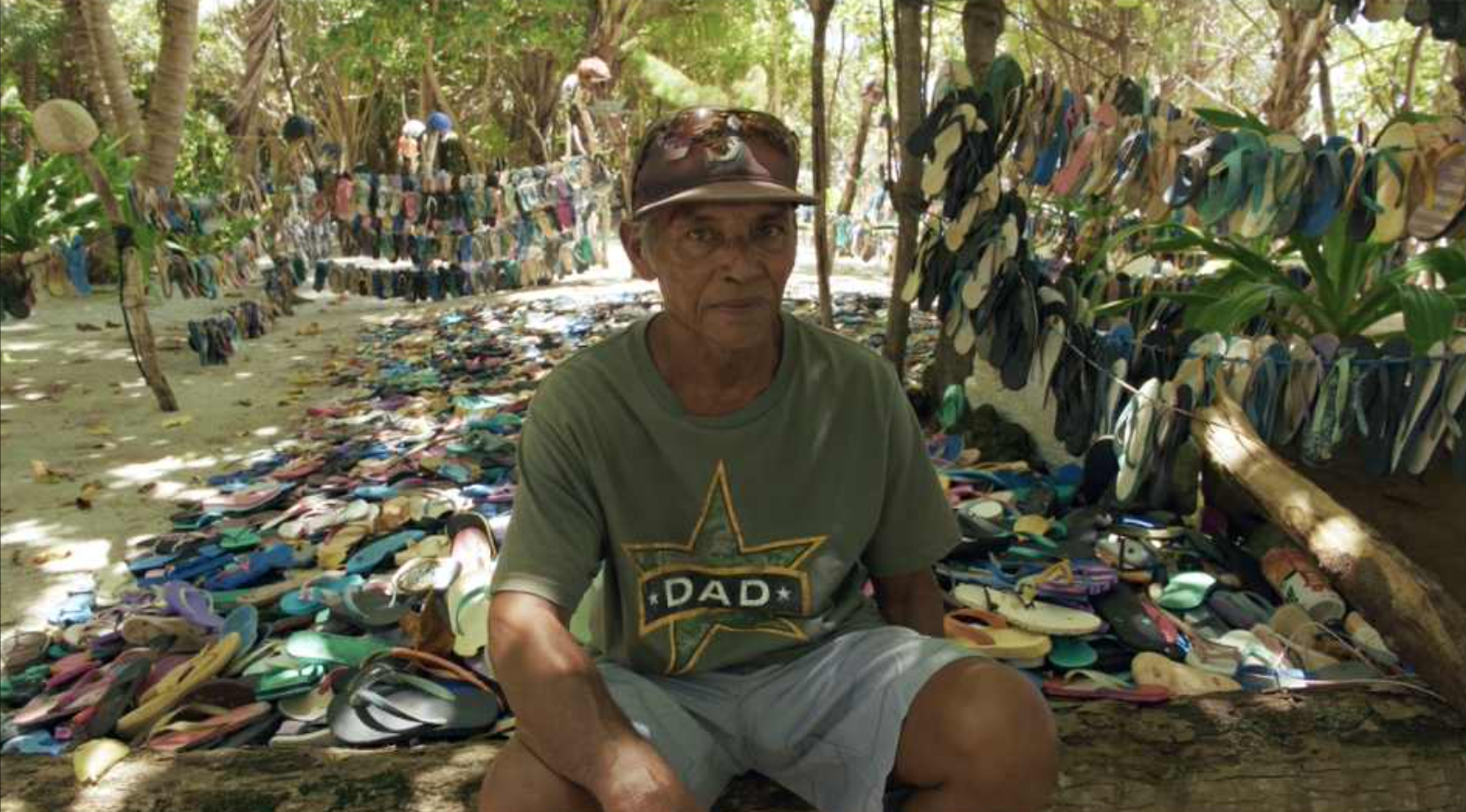
When we had the privilege of visiting this place it was to document the issue of plastic being faced by Pacific Island Nations. One of the most vulnerable groups that face a tide of plastic pollution on land and in the sea. When we were tasked with the project you think you know what you will experience, but nothing can prepare you for what you see. Lazarus admitted to us his installation is a desperate cry for help because he doesn’t know what else to do and he doesn’t have a seat at the boardroom tables who manufacture and distribute plastic products across the world.
Right now, as the tides rise and fall, and the ocean keeps lapping on that shore, you can be sure that so is a new wave of foreign plastic arriving. The seen and unseen. The macro and micro. And also right now, as you read this, the world is gathering in Geneva, Switzerland at the sixth intergovernmental negotiating committee meeting to establish a framework to address the entire life-cycle of plastic. A framework which was called for by Fiji and supported by other Pacific Island nations, then a large portion of the world. Why? Because they are drowning in the stuff! Because they make a small percentage of plastic, yet endure the burden which enters the islands via transboundary currents and consumer goods, and almost never leaves! In the negotiating rooms there are two sides. Those who want the status quo because any change will adversely impact their economies… or so they say! The other side is made up of 100 Countries, including some of the world’s smallest, who are standing up and standing together in an attempt to stem the tide of plastic on behalf of all 8 billion of us!
This week, the Trump Administration sent a memo urging Countries to reject plastic pollution caps in the UN Treaty. The same man who called for the reintroduction of the plastic straw because paper just doesn’t cut it when he is sucking his soda!
The oil producing nations have also worked to block and dilute the process and outcomes since the process began. You don’t have to be a rocket scientist to understand why, but I ask, what about Lazarus who’s thousands of kilometres away caring for his Country and picking up plastic with nowhere to put it? And what about the micro plastics in the ocean, ice-caps and air? The nano plastics from car tyres, nappies and our clothing amongst other things. Or the research linking the 16,000 chemicals in plastic to cancer, endocrine and fertility disruptions amongst other health issues? Do they not count because of bottom lines and soft drink?
Today is day six of the Treaty negotiations. It’s also the eighth of the eighth. Lions Gate. A date aligned with significant astral positions and a date we are encouraged to dream and manifest. If that’s the case, I dream of a world where Lazarus, the turtles, the sea grass and all of us matter. I dream of a moment in time when those in ivory and oil towers realise their power and capacity to make a decision which will change the outcome in favour of all of us. The ones here and the ones to come. That our value is greater than any fiscal outcome.
Make no mistake, we are in the middle of an existential crisis with no bench mark in history to look back on or measure from. No one really knows the full effects of what is going on or the level of health impacts we are enduring, let alone our animal life and environments.
When I was a little girl, my Grandfather warned me plastic would choke the earth. It set in train a perspective and fear I have carried through my adult life to date, and unfortunately his prediction is coming to pass. So please, we call on you, the ones making the decisions on behalf of all of us, to meet the scale of this borderless crisis with the weight of your courage to protect us and the generations to come. And to anyone reading this, no matter your background or position, please pray, pray with all your might that the people in the room in Geneva find a way to get a strong Treaty through.
THE PLASTIC POLLUTION CRISIS IN THE PACIFIC
…at a glance
-
Every year, an estimated 8-10 million tonnes of plastic waste enters the oceans, harming marine life, ecosystems, and human health. (UNESCO)
-
Pacific Island nations bear a disproportionate burden of plastic pollution, despite contributing minimally to global plastic waste. (SPREP)
-
Chemicals leach from plastic, get into us and are linked to serious health risks, including cancer and endocrine disorders. (Minderoo Foundation)
-
Without urgent action, plastic waste in the ocean could outweigh fish by 2050. (Ellen MacArthur Foundation)
Plastic Tsunami - Voices of the Pacific is a powerful narrative that shines a light on the challenges faced by the people of the Pacific Islands and region in the relentless tide of plastic pollution and their determination to find support in their quest to stop it.

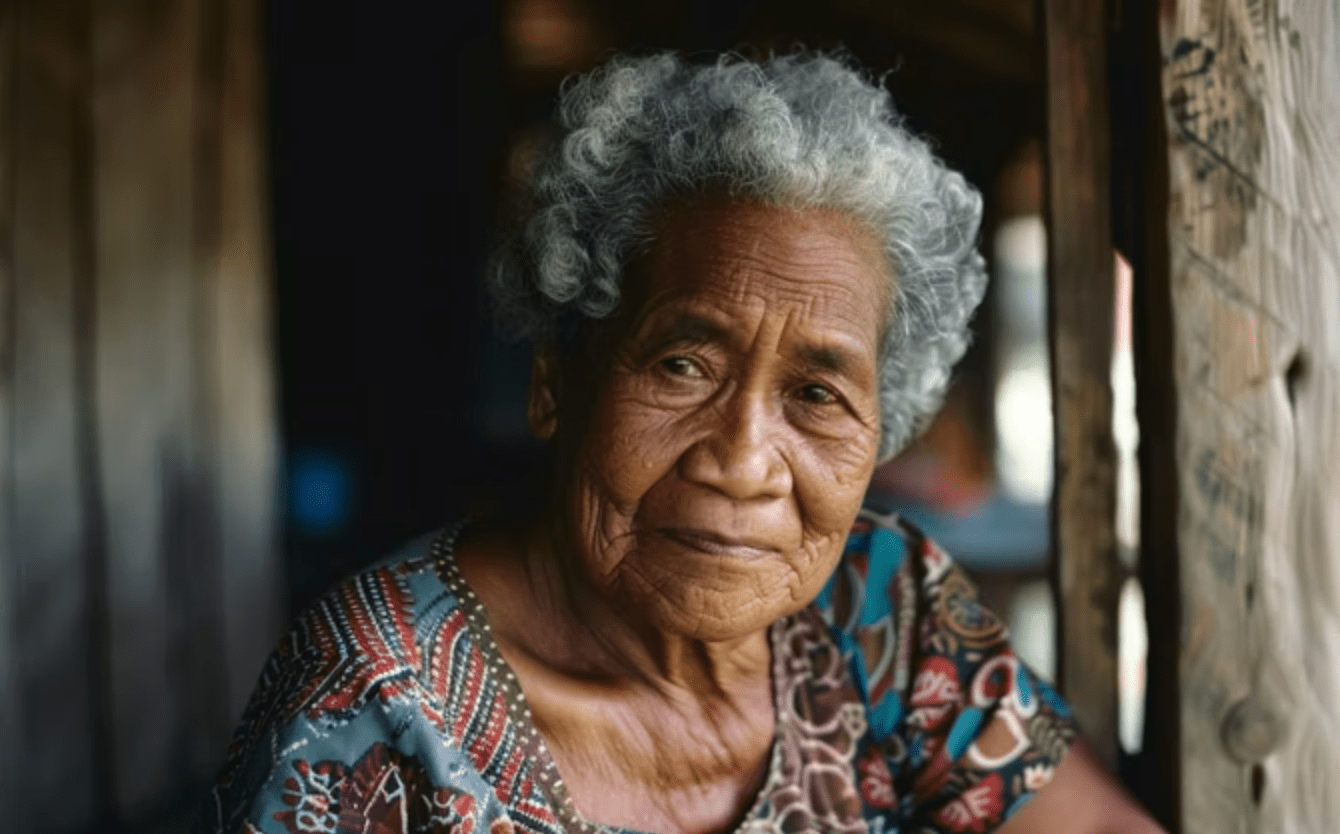
Bringing forward the voices of those at the heart of this crisis: community leaders, chiefs, and everyday islanders confronting the daily realities of plastic pollution, the film paints a portrait of multigenerational island families spread across the Pacific, each facing unique struggles yet together forming a powerful reflection of the region’s ongoing fight.

The impact of plastic pollution

On Human Health
Plastics contain harmful chemicals like BPA, phthalates, and styrene, may disrupt hormones and increase cancer risk (PMC, 2022)
Microplastics can bioaccumulate in the body and may lead to lung disease, digestive disorders, and neurological effects (ScienceDirect, 2024)
On Marine Life
Plastic debris is often mistaken for food, leading to malnutrition, poisoning, and death in marine species (World Animal Protection)
“Ghost gear” – abandoned fishing nets and plastic waste – entangle marine animals, causing suffocation and injury. This makes up an estimated 10% of marine waste.
Chemicals in plastics leach into water, affecting marine ecosystems. (World Wildlife Fund)
On the Ocean
Plastic pollution disrupts marine ecosystems, coral reefs, and biodiversity.
The Great Pacific Garbage Patch, an accumulation of plastic debris, continues to expand, exacerbating climate change effects by disrupting the ocean’s carbon cycle.

We need your help!
Plastic Tsunami - Voices of the Pacific is more than a film, it’s a movement to bring their stories to the world and push for real change.
Your support can make a difference. Every donation helps us take this urgent message to global decision-makers.
Together, we can turn the tide. Thank you for standing with us.